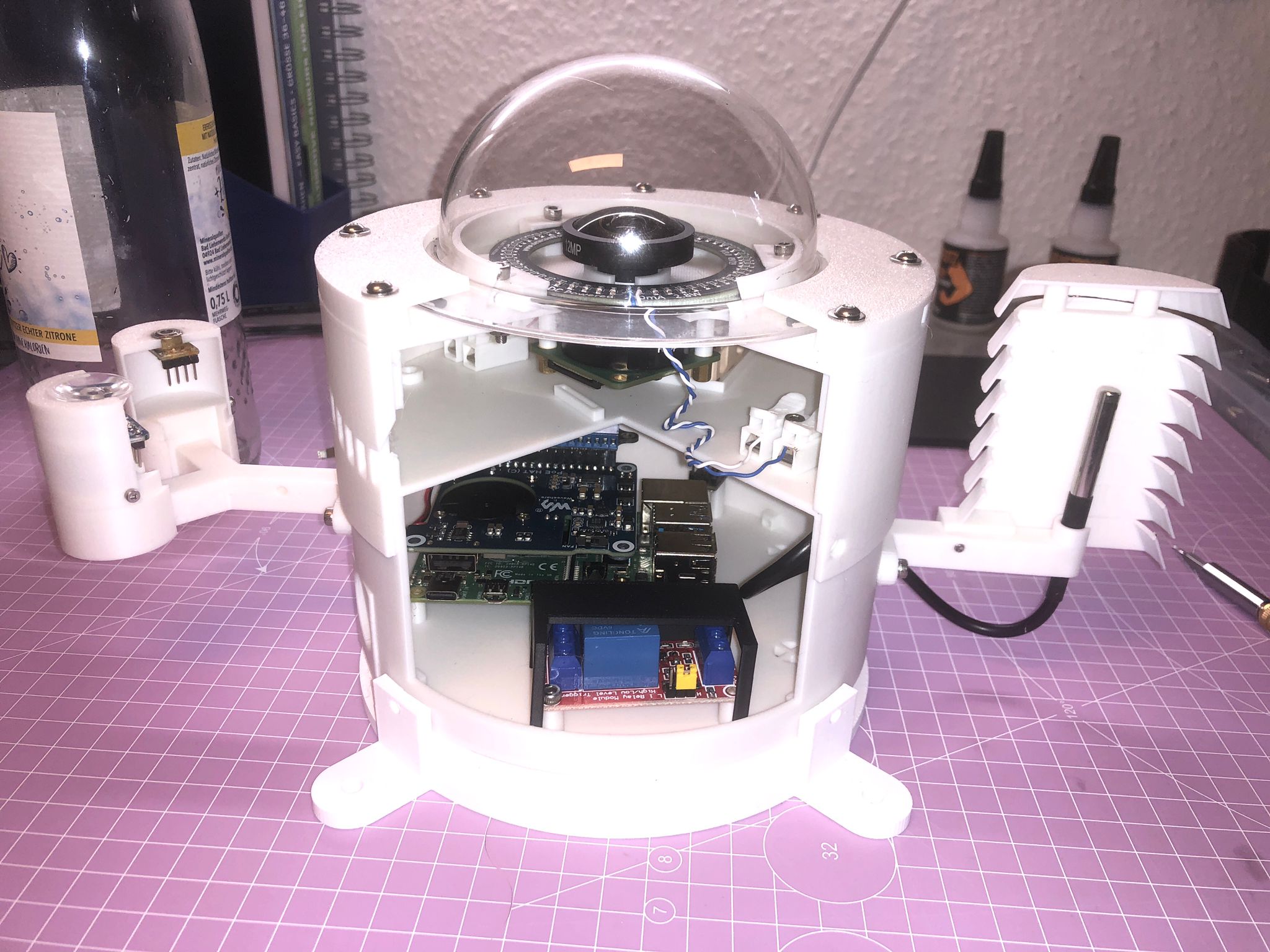
For good images you need: a clear dome, reliable sealing and as little fog/dew as possible. Use the right O-ring and a heater.
Tight sealing + less dew = stable operation
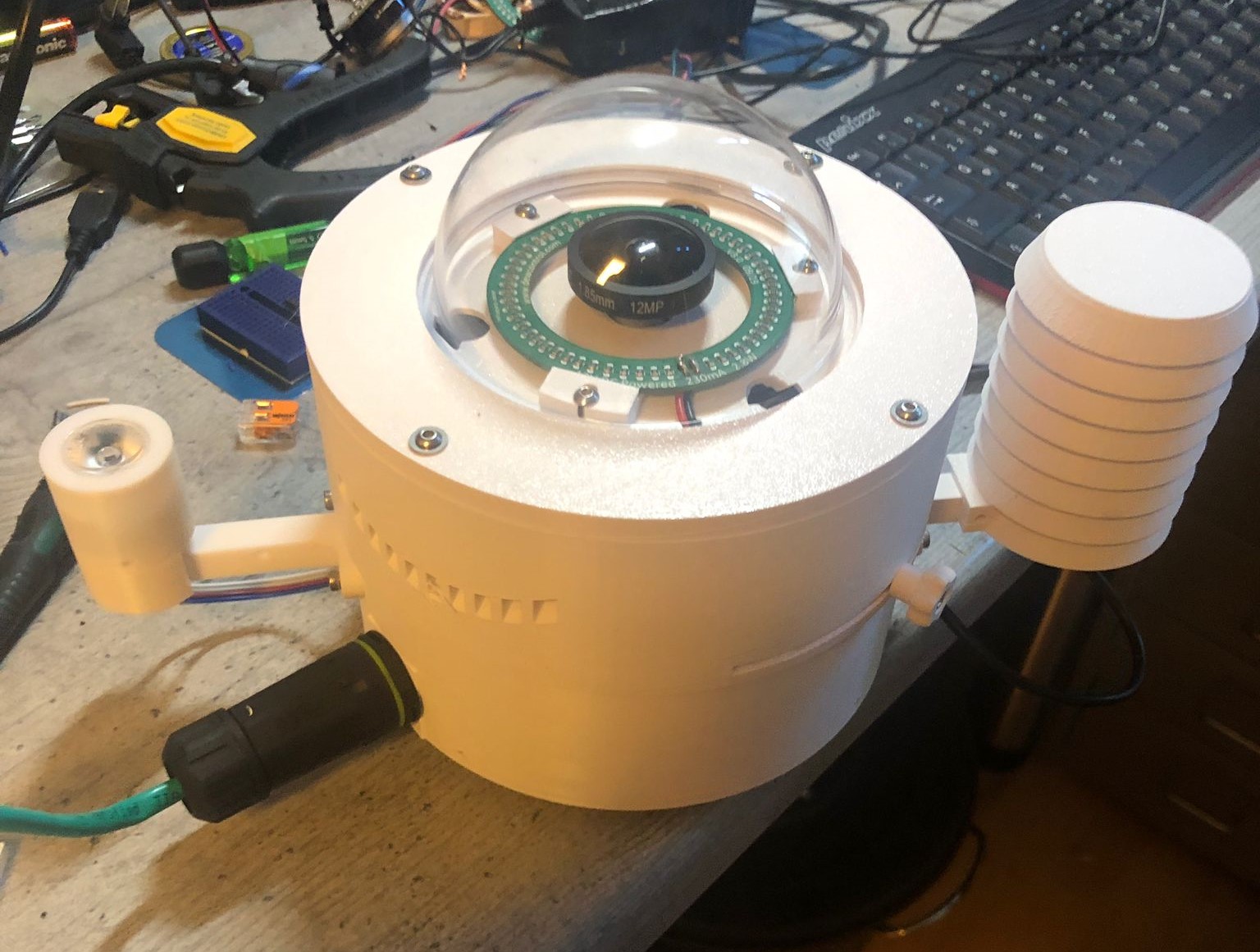
Acrylic dome + O-ring
Ensure proper fit, even pressure on the O-ring and a smooth sealing surface. Even a small leak can quickly bring moisture inside.
Reduce dew / fogging
A dew heater ring or 12V resistors can reduce fogging significantly. Important: switch via relay and wire it properly.
If you see fogging: first check O-ring/fit and whether the heater switches correctly.
🧵
3D printing notes
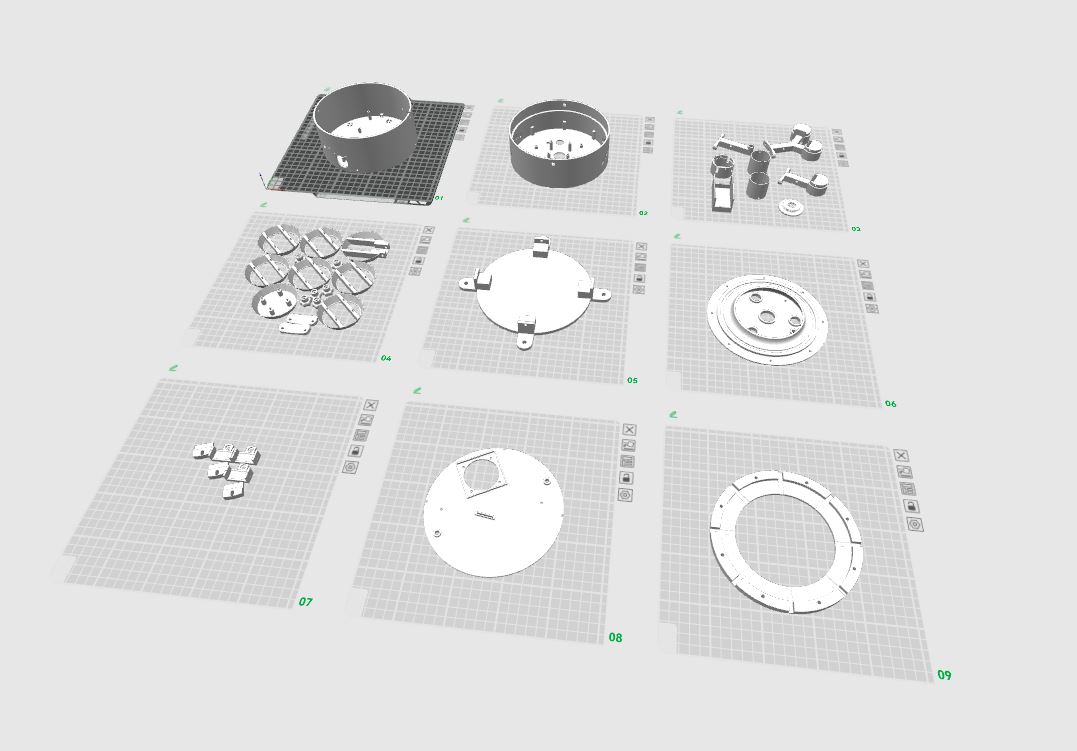
All housing parts are printed in ASA or PETG. PETG works, but ASA is usually the better choice for long-term outdoor use.
ASA (recommended)
ASA is UV resistant and more temperature stable — ideal for permanent outdoor use (sun, frost, summer heat).
PETG (possible)
PETG is easier to print and very durable. It works outdoors, but may age faster under strong UV and heat exposure.
Tip: print critical exterior parts in ASA. PETG is often fine for prototyping and interior components.
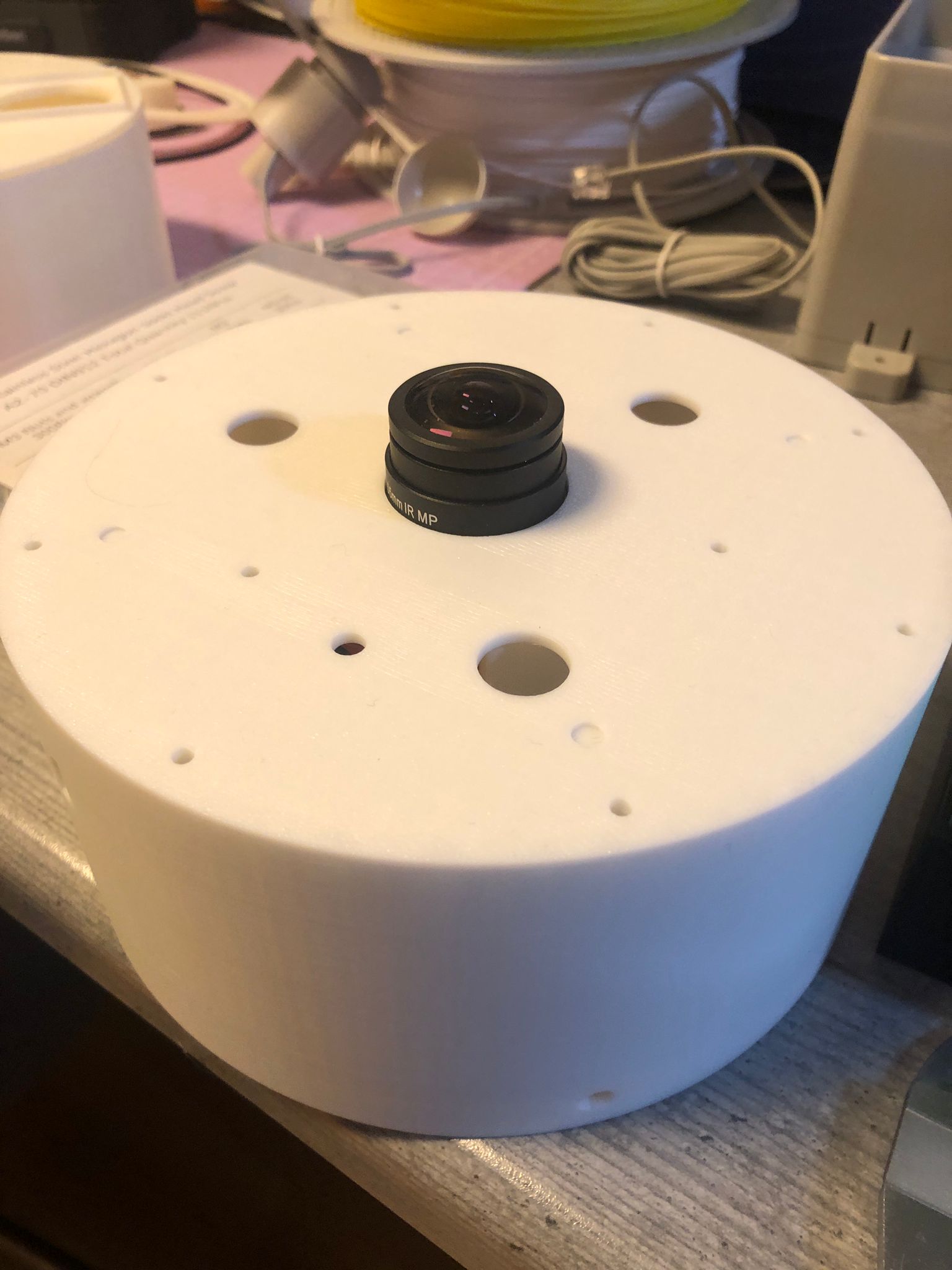
Demonstrator: prototype setup to test wiring, sensors, and the Raspberry Pi before the final assembly.
📘
Assembly documentation (PDF)
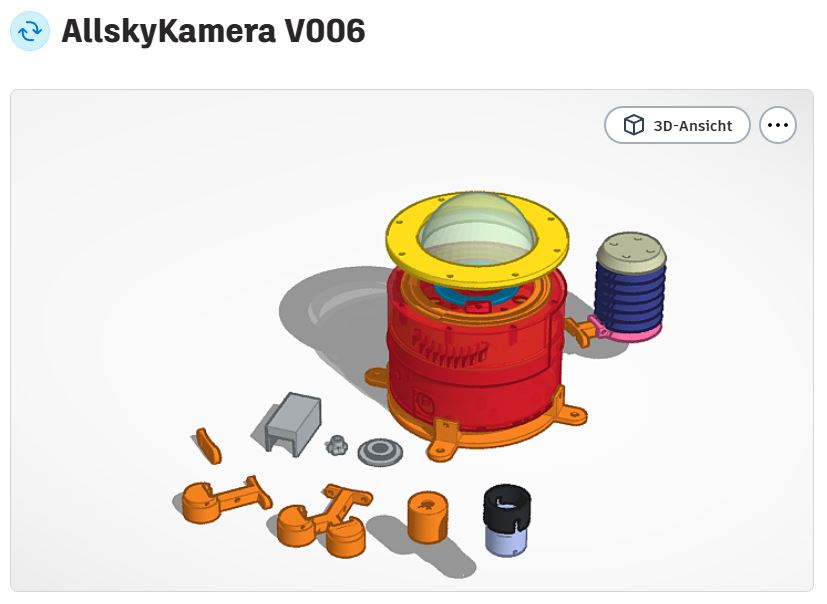
A detailed assembly and mounting guide for version V006 is available as a PDF. It covers the mechanical build, component placement, and practical notes from real-world use.